
As we move through the first quarter of 2026, the question on every Arizona resident’s mind is no longer just “where should I live,” but “can I afford to buy?” The landscape of the Grand Canyon State’s real estate has shifted significantly over the last few years. While the frenetic bidding wars of the early 2020s are a distant memory, they have been replaced by a market defined by high interest rates and elevated home values. Understanding the average mortgage payment Arizona residents are facing today is essential for anyone trying to decide if homeownership is a sound financial move or a luxury they should postpone.
For many, the dream of owning a home in cities like Phoenix, Tucson, or Scottsdale feels increasingly complex. As mortgage rates hover around the 6 percent mark, the monthly cost of a home has reached levels that once seemed impossible for the average family. This guide breaks down the current data to help you determine if 2026 is the year to finally lock in a deed or if your bank account is better off with a lease agreement.
Breaking Down the Monthly Costs in 2026
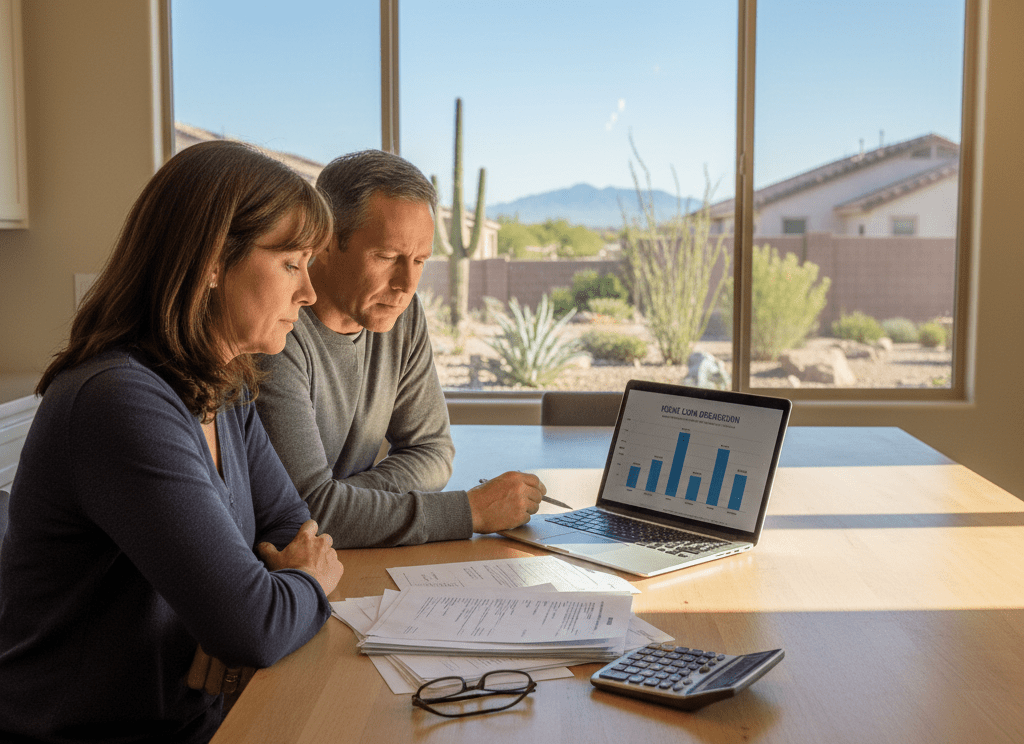
When we talk about the average mortgage payment Arizona homeowners see on their statements, we have to look at several moving parts. It isn’t just the principal and interest. In 2026, the typical home in Arizona is valued at approximately $469,000. With a standard 10 percent to 15 percent down payment and an interest rate of roughly 6.1 percent, the principal and interest portion of your bill alone can sit between $2,300 and $2,600.
However, your actual monthly outlay is higher. Arizona may have some of the lowest property tax rates in the nation, averaging around 0.44 percent of the assessed value, but home insurance premiums have been on the rise. In 2026, the average annual home insurance cost in Arizona is roughly $2,300. When you add in private mortgage insurance (PMI) for those with less than 20 percent down, the total monthly average mortgage payment Arizona buyers face often exceeds $3,000.
The Rent vs. Buy Dilemma: A Widening Gap
Historically, Arizona was a place where mortgage payments were almost identical to local rents. That script has been flipped. In 2026, the “income premium” to buy a home over renting an apartment in major hubs like Phoenix has reached nearly 68 percent. This means that to comfortably afford the average mortgage payment Arizona requires for a median-priced home, a household typically needs to earn over $115,000 annually.
Compare that to the rental market, where median rents are currently averaging around $1,730. On paper, renting appears significantly cheaper on a month-to-month basis. However, this is a short-term view. Renters face annual increases and build zero equity, whereas homeowners are locking in their largest expense. If you are looking to build long-term wealth, the rent vs buy in Arizona calculation still often favors the buyer who plans to stay for at least seven to ten years.
How Location Impacts Your Mortgage Check
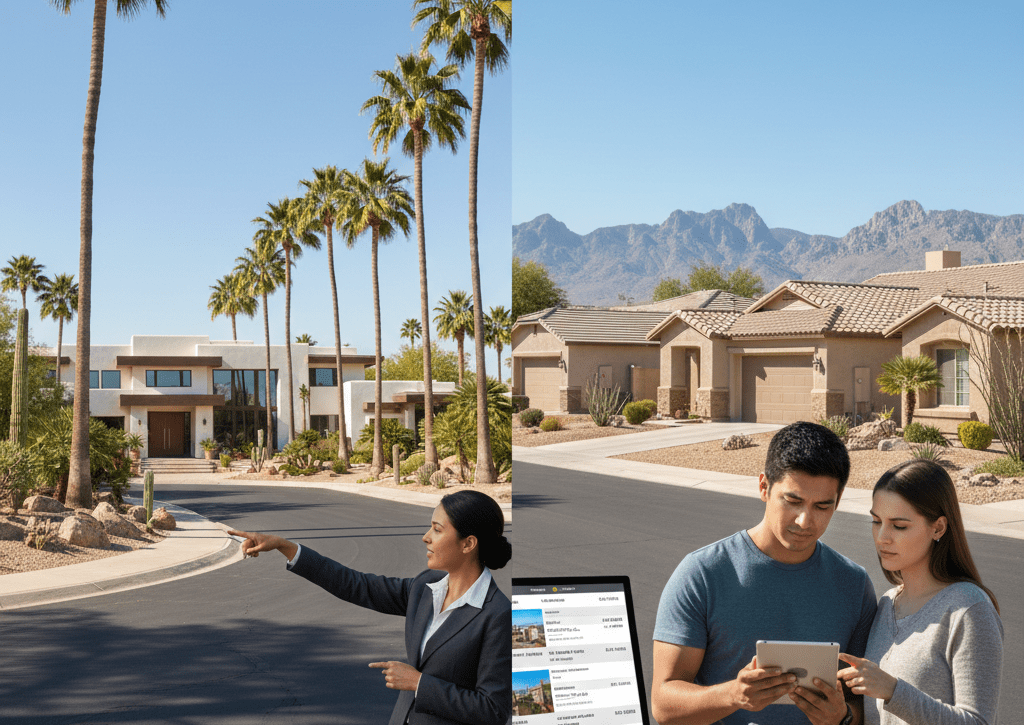
Arizona is not a monolithic market. The average mortgage payment Arizona families pay in the suburbs of Phoenix is vastly different from what they might pay in Yuma or Sierra Vista. In Scottsdale, where luxury homes are the norm, mortgage payments can easily double the state average. Conversely, in more affordable regions, you can still find properties where the monthly cost aligns more closely with the $2,000 mark.
Choosing the right school district can impact home prices and resale value in Arizona neighborhoods.
If you are a first-time buyer, focusing on the best Arizona cities for first time buyers can lead you to pockets of the state where inventory is higher and sellers are more willing to offer concessions. These concessions, such as interest rate buy-downs, can significantly lower your initial average mortgage payment Arizona costs, making the transition from renting to owning much more manageable.
The Role of Interest Rates and Refinancing
The primary driver of the average mortgage payment Arizona has seen lately is the Federal Reserve’s stance on inflation. While rates have moderated from their 2023 peaks, they remain high enough to price many people out. Experts predict that if rates dip toward 5.5 percent later in 2026, a wave of buyers will return to the market, potentially pushing home prices even higher.
According to the Federal Reserve’s monetary policy decisions, interest rate adjustments directly influence mortgage borrowing costs across the country.
For those who bought when rates were at 7 percent, 2026 is becoming the year of the “refi.” Dropping your rate by even one percentage point can shave $300 to $400 off your monthly bill. This potential for future savings is a key reason many still choose to buy now; you “marry the house but date the rate.” If you find a home that fits your needs today, you can secure it and look for opportunities to lower your average mortgage payment Arizona expenses down the line when the economy shifts.
Hidden Costs That Change the Math
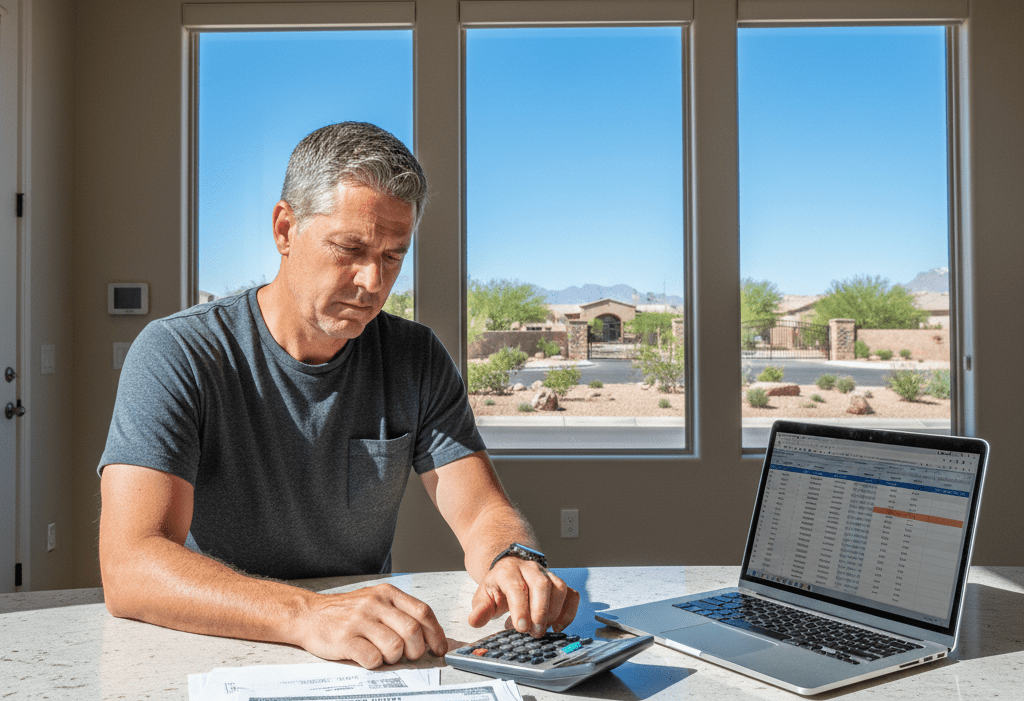
One reason people struggle with the average mortgage payment Arizona provides is that they forget the “ownership tax.” Beyond the bank payment, you have utilities and maintenance. Arizona’s extreme summer heat means that electricity bills in July and August can easily add $400 to your monthly housing costs. Additionally, many Arizona communities are governed by Homeowners Associations (HOAs).
HOA fees can range from a modest $30 a month to several hundred dollars in master-planned communities with pools and security. Before you commit to a purchase, it is vital to perform a deep dive into the hidden costs of buying in Phoenix or other major metros. When you factor in a $300 HOA fee and a $400 summer cooling bill, that “affordable” mortgage can quickly become a financial burden if you haven’t budgeted correctly.
Is Buying Still the Right Move in 2026?
Despite the higher monthly costs, the psychological and financial stability of owning a home still holds a massive appeal. Renting provides flexibility, but it leaves you vulnerable to a landlord’s decision to sell or hike the rent by 10 percent. When you own, you are in control. Even if the average mortgage payment Arizona residents face is higher than the average rent, the “forced savings” of paying down a principal balance cannot be ignored.
Furthermore, Arizona continues to be a destination for those leaving high-tax states like California and Washington. This steady migration supports home values even when the national market cools. For many, the decision to buy is a bet on the continued growth of the Southwest. If Arizona continues its trajectory as a tech and semiconductor hub, the homes bought today at “high” prices will likely look like bargains by 2030.
Strategies to Lower Your Monthly Payment
If the current average mortgage payment Arizona figures are making you nervous, there are ways to move the needle. Putting 20 percent down is the most obvious way to avoid PMI and lower your interest, but it isn’t the only way. Many buyers are now looking at 2/1 buy-downs, where the seller pays to lower your interest rate for the first two years of the loan.
Another strategy is looking for homes that need a little cosmetic work. “Turnkey” homes in Arizona command a significant premium. By choosing a “fixer-upper” in a solid school district, you can often secure a lower purchase price, which directly translates to a lower average mortgage payment Arizona requires for that specific property. This “sweat equity” approach remains one of the few ways left to beat the high cost of entry in today’s market.
FAQs
What is the average 30-year fixed rate in Arizona right now?
As of early 2026, the average rate for a 30-year fixed mortgage in Arizona is hovering between 5.9 percent and 6.2 percent, depending on your credit score and down payment size.
How much should I expect to pay in property taxes in Arizona?
Arizona has very friendly property tax laws. On average, you will pay about 0.44 percent of your home’s assessed value, though this can vary slightly by county and local bonds.
Is it better to rent or buy in Phoenix in 2026?
Strictly on a monthly cash-flow basis, renting is currently cheaper in most Phoenix suburbs. However, buying is generally better for those who plan to stay long-term and want to build equity rather than paying off a landlord’s mortgage.
Do Arizona homes require special insurance?
Standard homeowners insurance is required. While you don’t typically need flood insurance in the desert, many homeowners opt for “sewer backup” or “roof” riders due to the intense monsoon seasons.
How much is the typical down payment in Arizona?
While 20 percent is ideal, many first-time buyers are successfully using FHA loans with as little as 3.5 percent down or VA loans with 0 percent down for eligible veterans.
Conclusion
The average mortgage payment Arizona residents deal with in 2026 reflects a more mature, expensive market than the one we saw a decade ago. While the “income gap” between renting and buying has widened, the fundamental benefits of homeownership remain. Owning a piece of the Arizona desert is an investment in your future, providing a hedge against inflation and a stable environment for your family. Whether you are looking at the suburban sprawl of the West Valley or the high-desert charm of Tucson, the key to success is preparation. By understanding the full scope of your monthly obligations, from taxes and insurance to HOA fees, you can make a move that ensures your financial health for years to come. Arizona remains a place of opportunity, and with the right strategy, the path to the American dream is still wide open.