
Property flipping has become an increasingly popular investment strategy across the Southwest, and Arizona continues to stand out as one of the most active markets. With steady population growth, strong housing demand, and diverse property types, investors are finding real opportunities when projects are planned correctly. This Arizona property flipping guide breaks down everything investors need to know before starting, from upfront costs to potential risks and realistic return expectations.
Arizona’s housing market offers opportunities for both experienced investors and first time flippers. Cities like Phoenix, Tucson, and Scottsdale have neighborhoods where older properties can be renovated and resold at competitive prices. However, success depends on understanding local market conditions, renovation budgets, and resale timing. Without the right strategy, even a promising deal can quickly turn into a costly mistake.
This Arizona property flipping guide is designed to help investors evaluate deals with confidence and avoid common pitfalls. Whether you are flipping a single-family home or considering multiple projects, understanding the numbers is essential before making any purchase.
Understanding the Arizona Property Flipping Market

Arizona’s real estate market has evolved significantly over the past decade. Rising demand from out-of-state buyers, retirees, and remote workers has increased competition for well priced properties. In many areas, inventory remains limited, which can drive up acquisition costs for flippers.
At the same time, certain neighborhoods still present opportunities, particularly homes requiring cosmetic or moderate structural updates. Investors who understand local zoning rules, buyer preferences, and renovation expectations are better positioned to succeed.
Before purchasing a property, investors should understand the legal framework that governs real estate transactions in the state. Reviewing Arizona homeownership regulations helps flippers stay compliant with disclosure requirements, fair housing laws, and federally backed financing rules that can influence resale timelines.
Phoenix remains one of the most active markets for residential investors due to job growth, population increases, and consistent buyer demand. Many flippers focus on value-add properties in transitional neighborhoods where upgrades can significantly increase resale value. Exploring current Phoenix real estate investment opportunities helps investors identify areas with strong demand and realistic pricing expectations.
This Arizona property flipping guide emphasizes that location matters more than ever. Properties close to employment centers, healthcare facilities, and lifestyle amenities typically sell faster after renovation. Understanding who your end buyer is helps shape renovation decisions and pricing strategies.
Key Costs Involved in Arizona Property Flipping
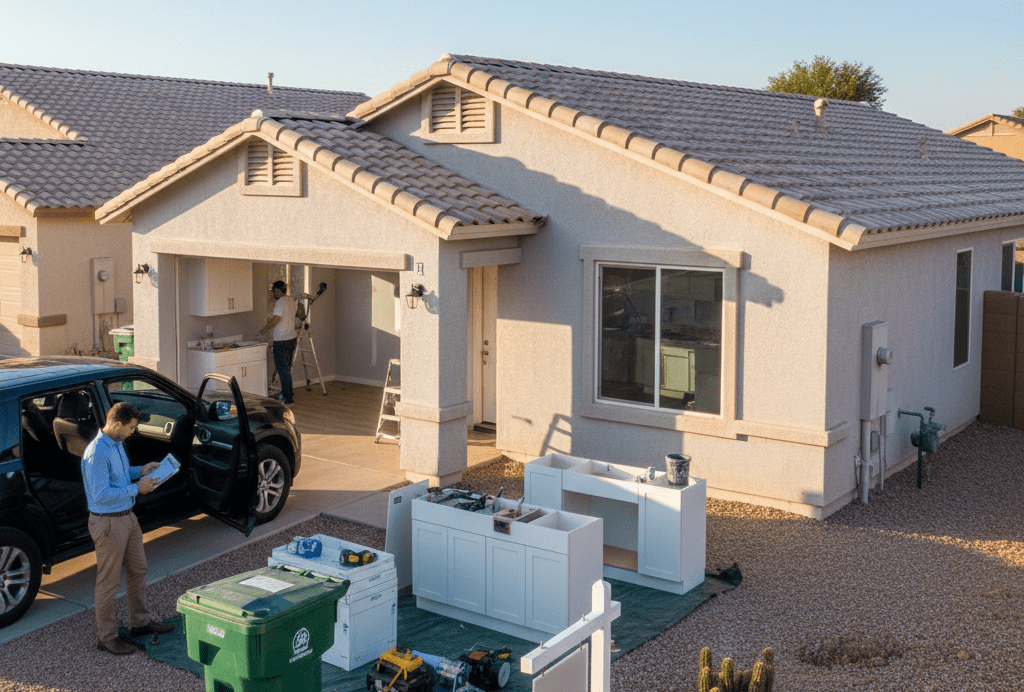
Before purchasing a property, investors must clearly understand all associated costs. Underestimating expenses is one of the most common reasons flipping projects fail.
Purchase and Financing Costs
The purchase price is just the starting point. Investors using financing must factor in loan origination fees, interest rates, and holding costs. Hard money loans, while faster to secure, often come with higher interest rates that can impact overall profitability.
Cash buyers may reduce financing costs but still need to account for opportunity costs. This Arizona property flipping guide recommends running conservative financial projections regardless of financing method.
Renovation and Repair Expenses
Renovation costs vary widely depending on property condition and location. Cosmetic upgrades such as flooring, paint, and fixtures are more predictable, while structural repairs can quickly exceed budgets.
In competitive Arizona markets, buyers expect modern kitchens, updated bathrooms, and energy efficient features. Cutting corners during renovations often leads to longer selling times or price reductions.
Investors evaluating older properties should also be aware of regional building standards and permitting requirements. Unexpected delays can increase holding costs and reduce ROI.
Holding and Selling Costs
Holding costs include property taxes, insurance, utilities, and maintenance while the home is under renovation or listed for sale. These costs accumulate monthly and should be built into every deal analysis.
Selling costs such as agent commissions, staging, and closing fees also reduce final profits. Investors planning to list renovated homes benefit from understanding the best time to sell based on seasonal trends and buyer demand. For those preparing an exit strategy, reviewing insights on the best time to sell a house in Arizona can help align renovations with market timing.
Risks Investors Should Consider
Every real estate investment carries risk, and property flipping is no exception. This Arizona property flipping guide outlines the most common challenges investors face and how to manage them.
Market Volatility
Housing markets can shift due to interest rate changes, economic conditions, or local supply fluctuations. A property purchased at the peak of the market may be harder to sell if demand slows.
Investors should analyze recent sales data and price trends rather than relying solely on future appreciation. Conservative pricing assumptions help protect profit margins.
Renovation Delays and Budget Overruns
Unexpected repairs are a reality in many flip projects. Issues such as outdated wiring, plumbing problems, or roof damage often surface after renovations begin.
Building a contingency budget of at least ten to fifteen percent helps reduce financial stress when surprises occur. This Arizona property flipping guide strongly encourages thorough inspections before purchase.
Regulatory and HOA Restrictions
Some Arizona neighborhoods are governed by homeowners associations with strict renovation and resale rules. Violating these guidelines can result in fines or delays.
Understanding local HOA regulations and city permitting processes helps avoid compliance issues. Investors flipping properties within planned communities should review all governing documents carefully.
Evaluating ROI for Arizona Property Flips
Return on investment is the primary goal of any flip. Calculating ROI accurately requires realistic assumptions and disciplined analysis.
Calculating Potential Profit
ROI is determined by subtracting total project costs from the final sale price. This includes purchase price, renovations, holding costs, financing fees, and selling expenses.
This Arizona property flipping guide recommends avoiding optimistic resale estimates. Using comparable recent sales provides a clearer picture of achievable pricing.
Factors That Improve ROI
Strategic upgrades, efficient project timelines, and strong market demand all improve returns. Investors who understand buyer preferences can focus renovations on features that add value rather than unnecessary upgrades.
Some investors choose to diversify their strategy by holding select properties as rentals instead of selling immediately. Understanding local rental trends and long term forecasts can support this decision. Reviewing data on the Arizona rental property forecast 2025 can help investors assess whether holding a property aligns with long term goals.
When Flipping May Not Be the Best Option
Not every property is ideal for flipping. Homes with extensive structural damage, location challenges, or restrictive zoning may generate better returns as rentals or long term investments.
In some cases, transitioning from flipping to other investment strategies such as rentals or turnkey properties can reduce risk. Investors exploring alternative approaches often research Phoenix real estate investment opportunities to compare potential returns.
Choosing the Right Property to Flip
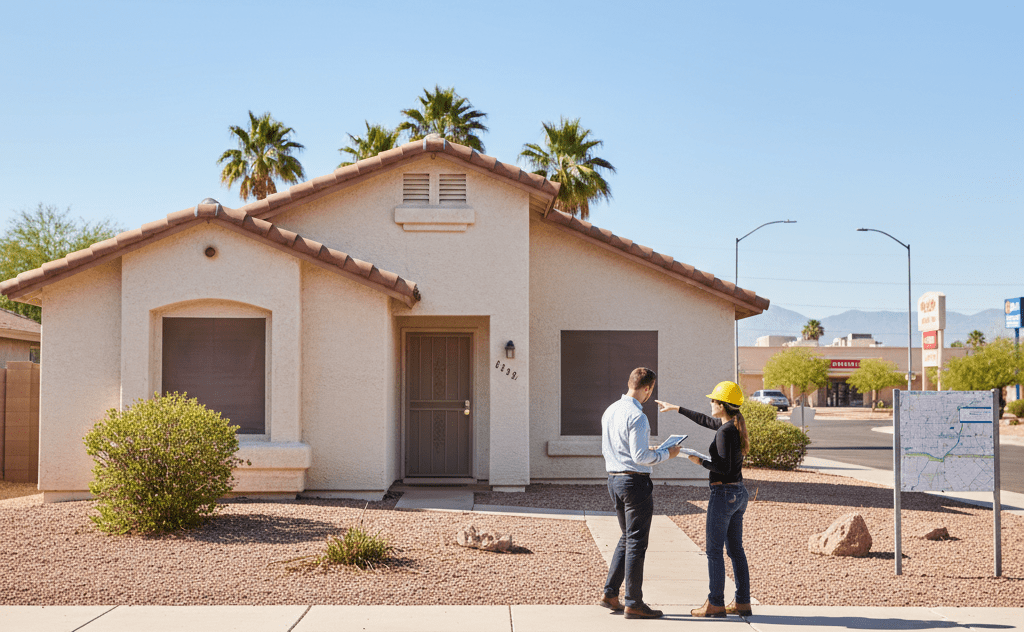
Property selection is one of the most critical steps in the flipping process. The right purchase sets the foundation for success.
Neighborhood Analysis
Strong neighborhoods typically have stable demand, good schools, and access to amenities. Investors should also look at future development plans that could impact property values.
This Arizona property flipping guide stresses the importance of understanding micro markets. Even within the same city, property performance can vary significantly from one neighborhood to another.
Property Condition Assessment
Homes requiring cosmetic updates are generally lower risk than properties needing major structural work. Investors should work with experienced inspectors and contractors to accurately assess renovation scope.
Understanding repair timelines helps avoid extended holding periods that eat into profits.
Working With Real Estate Professionals
Successful flippers rarely operate alone. Experienced agents, contractors, and property managers provide valuable insights and efficiency.
Real estate professionals with local market knowledge can help investors identify undervalued properties, negotiate better deals, and price homes competitively. Those planning to list renovated homes may benefit from reviewing guidance on selling investment properties to understand market positioning and buyer expectations.
Long Term Outlook for Arizona Property Flipping
Arizona’s population growth and economic expansion continue to support housing demand. While market cycles will fluctuate, well planned flip projects remain viable in many areas.
This Arizona property flipping guide encourages investors to stay informed about interest rates, construction costs, and buyer preferences. Adapting strategies as conditions change helps maintain profitability over time.
FAQs
Is property flipping still profitable in Arizona?
Yes, when deals are carefully analyzed and renovation costs are controlled, flipping can still generate solid returns.
How much capital do I need to start flipping properties?
Capital requirements vary based on purchase price, renovation scope, and financing method.
Which Arizona cities are best for flipping?
Phoenix, Tucson, and select suburbs continue to offer opportunities, depending on neighborhood conditions.
How long does a typical flip take in Arizona?
Most projects take four to nine months, depending on renovation complexity and market conditions.
Do I need a license to flip properties?
No license is required to flip properties, but working with licensed professionals is recommended.
Conclusion
Property flipping can be a rewarding investment strategy when approached with preparation and discipline. This Arizona property flipping guide highlights the importance of understanding costs, managing risks, and setting realistic ROI expectations before purchasing any property.
Arizona offers diverse opportunities for investors willing to research neighborhoods, control renovation budgets, and adapt to market trends. By focusing on data driven decisions and building a reliable team, investors can position themselves for long term success in a competitive real estate market.